THE BIOLOGIST APPRENTICE
  • Home
  • About
  • Blog
  • Videos
  • Podcast
  • Support
  • Press
  • Contact

Not a spider, just a wingless fly

1/10/2016

0 Comments

 
Photography: Piotr Naskrecki
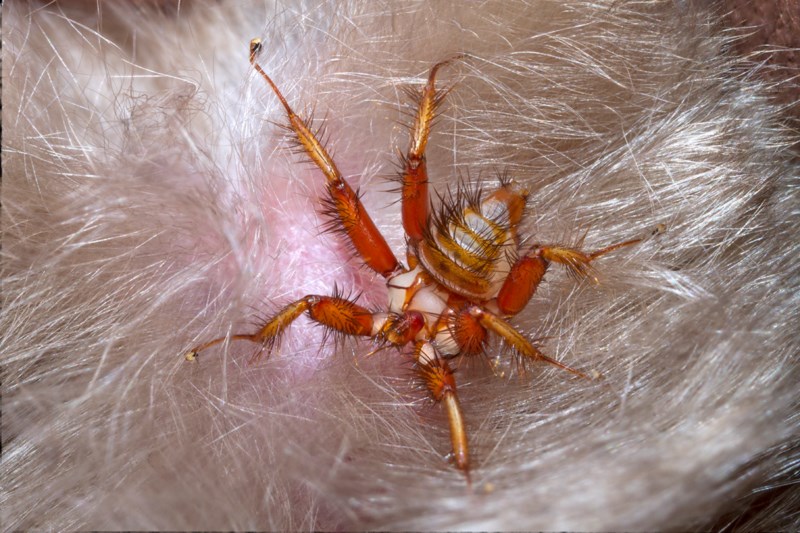
At first glance, the strange creatures  look like spiders or ticks, but they're actually a type of wingless fly found exclusively on bats. The ancestor of Penicillidia flies probably looked something like modern tsetse flies, which also feed on blood. But after millions of years of co-evolution with their furry hosts, bat flies have become highly specialised parasites. For starters, their bodies became flattened and very hard, making it almost impossible for their hosts to squash them. Special "claws" at the end of each foot and hairs on the legs make it extremely difficult to dislodge them from fur. 

In fact, because the parasites can't survive for very long on their own, the only time a female bat fly will leave its host is when the time comes to drop her larva off in a safe place  usually the wall of the bat's cave roost. Then, she'll quickly rush back, guided by the smell and warmth of her host. 

Source: 
earthtouchnews.com

A primera vista, las extrañas criaturas parecen arañas o garrapatas, pero en realidad son un tipo de mosca sin alas que se encuentras exclusivamente sobre los murciélagos. El antepasado de Penicillidia moscas probablemente se veía algo así como la mosca tsetsé moderna, que también se alimentan de sangre. Pero después de millones de años de coevolución con sus hospederos peludos, las moscas de los murciélagos se han convertido en parásitos altamente especializados. Para empezar, sus cuerpos quedaron aplastados y muy duros, por lo que es casi imposible que sus hospederos los aplasten. Sus "garras" especiales al final de cada pata y pelos en las patas hacen que sea extremadamente difícil desalojarlos de su piel.

De hecho, debido a que los parásitos no pueden sobrevivir por mucho tiempo por su cuenta, la única vez que una mosca  dejará a su hospedero es cuando llega la hora de dejar a su larva fuera en un lugar seguro,  por lo general es la pared de la cueva del murciélago . Entonces, ella se apresuran rápidamente de nuevo, guiada por el olor y el calor de su hospedero. 

Fuente: earthtouchnews.com

0 Comments


Leave a Reply.

    Blog Archive
    ​
    This blog isn't active anymore
    ​Disclaimer

    All the pictures on this blog and social networks belong to their respective authors and proper credits are given. Photos are used for illustrative and educational purposes only.

    Todas las fotografías de este blog y redes sociales son propiedad de sus respectivos autores, se mencionan los respectivos créditos. Estas fotos son únicamente utilizadas con fines ilustrativos y educativos.


    Archives

    March 2019
    January 2019
    December 2018
    November 2018
    October 2018
    August 2018
    May 2018
    April 2018
    March 2018
    February 2018
    August 2017
    July 2017
    June 2017
    May 2017
    January 2017
    December 2016
    October 2016
    August 2016
    July 2016
    June 2016
    May 2016
    April 2016
    March 2016
    February 2016
    January 2016
    December 2015
    November 2015
    October 2015
    September 2015
    August 2015
    July 2015
    June 2015
    May 2015
    April 2015
    March 2015
    February 2015
    January 2015
    December 2014
    November 2014
    October 2014
    September 2014
    August 2014
    July 2014
    June 2014
    May 2014
    April 2014
    March 2014
    February 2014
    January 2014
    December 2013
    November 2013
    October 2013
    September 2013
    August 2013
    July 2013
    June 2013
    July 2012

    RSS Feed

Powered by Create your own unique website with customizable templates.
  • Home
  • About
  • Blog
  • Videos
  • Podcast
  • Support
  • Press
  • Contact