THE BIOLOGIST APPRENTICE
  • Home
  • About
  • Blog
  • Videos
  • Podcast
  • Support
  • Press
  • Contact

Fantasy to Life series !

3/12/2015

0 Comments

 
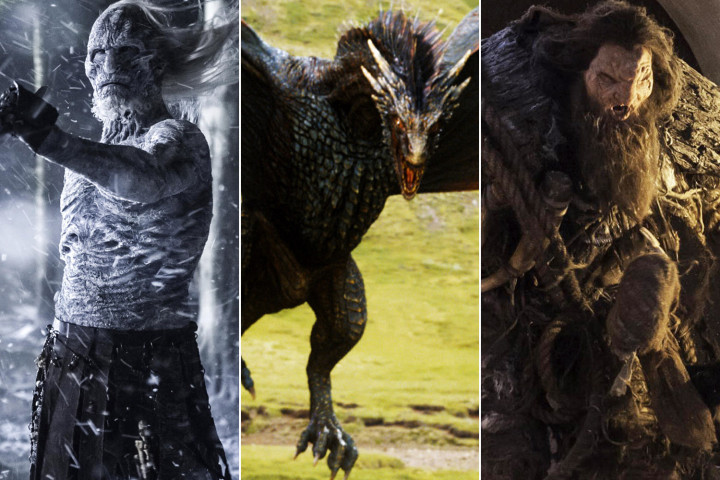
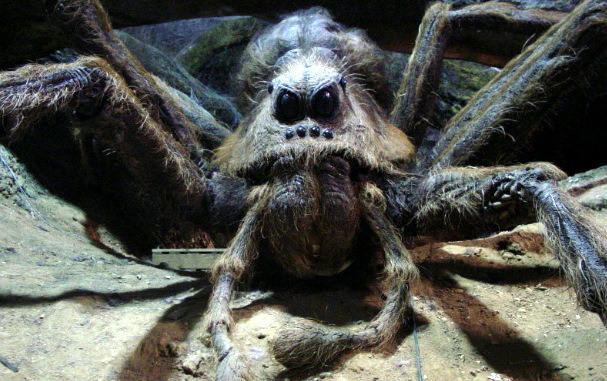
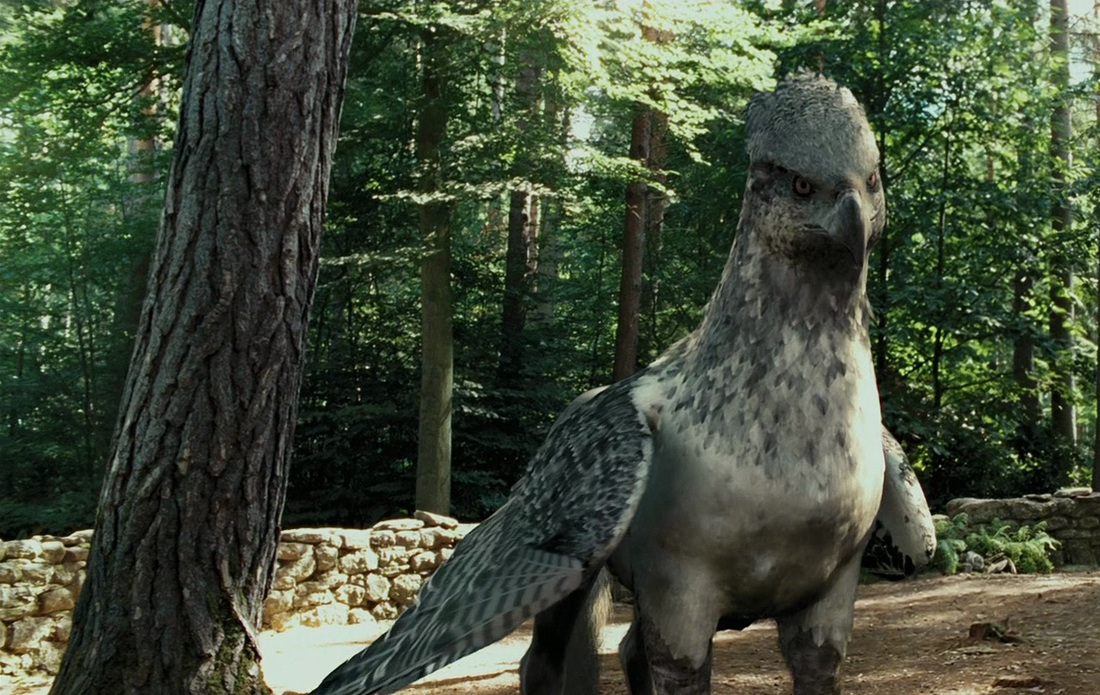
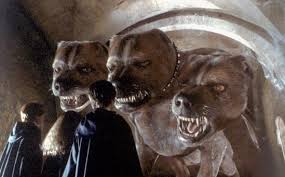
Images sources: nypost.com, www.cnet.com , harrypotter.com, mediagallery.com
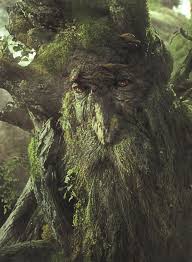
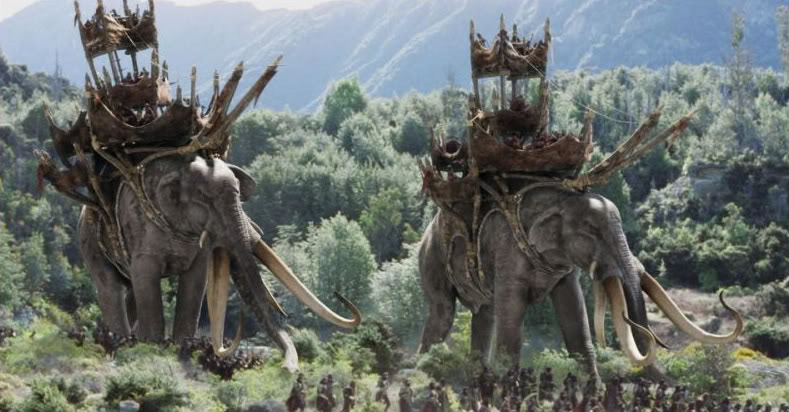
What is it that the worlds of Game of Thrones, Harry Potter and The Lord of the Rings, all have in common? ... Amazing and bizarre creatures!!  Most of which are of a more mythological nature such as; the undead White Walkers from beyond the Wall, “Fluffy” the Cerberus (3-headed dog) guarding the entryway to the Philosopher’s Stone, and “Treebeard” the ancient, sentient Ent of Fangorn Forest. Fans of Westeros, Hogwarts, and Middle-earth often find themselves absorbed within these fantasy sagas, using them to temporarily escape reality and imagine what it would be like to be apart of those worlds. 

Many creatures, however, are inspired from actual life forms. It is some of these creatures in which this blog series is focused on. 

The following articles are designed to feature some awesome real wildlife found in these incredible stories by bringing fantasy to life, all brought to you by The Biologist Apprentice and guest blogger Katey Duffey. 
0 Comments

Beautiful bioluminescent creatures from the sea 

3/11/2015

0 Comments

 
Researchers estimate that between 80 and 90 percent of deep-dwelling animals are bioluminous, creating light by mixing the pigment luciferin with luciferase, the enzyme that makes it glow. Glowing helps attract mates, lure prey or confound predators.

Imagen
Image: Steve Haddock/Monterey Bay Aquarium Research Institute.
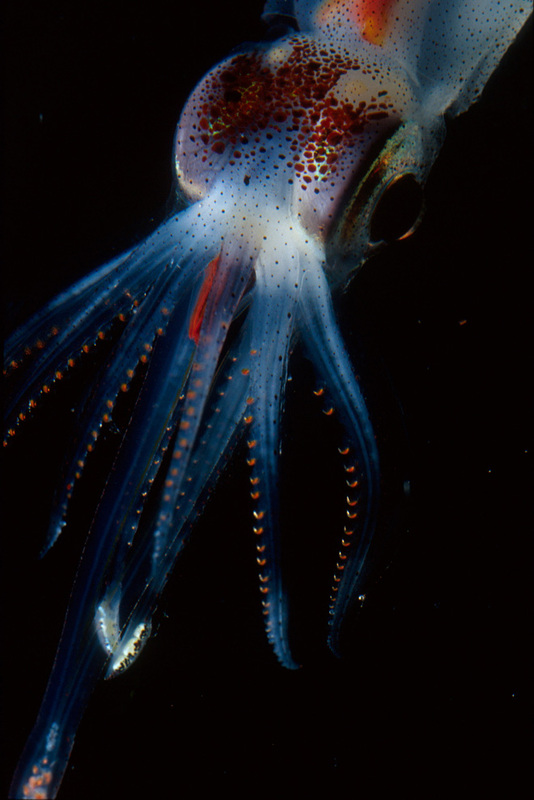
ABRALIOPSIS SQUID

This squid has small light organs on the underside of its body for camouflage. It uses this illumination to blend in with the sky, hiding its silhouette from predators watching from below.

Imagen
Image: Steve Haddock/Monterey Bay Aquarium Research Institute.
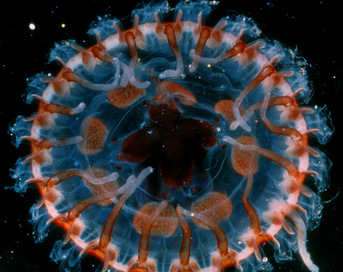
ATOLLA

When attacked, it sets off a brilliant light display that can be seen for 300 feet. Researchers think the fireworks are intended to attract something even larger and fiercer. 

Haz clic aquí para modificar.
Imagen
Image: Steve Haddock/Monterey Bay Aquarium Research Institute.
Imagen
Image: Steve Haddock/Monterey Bay Aquarium Research Institute.
Imagen
Image: NOAA.
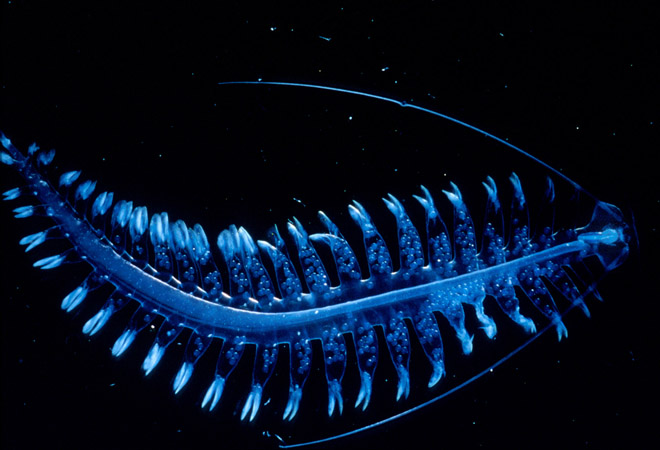
TOMOPTERIS

This sea worm, a polychaete, is one of the few creatures that make yellow light. If disturbed, it can let loose glowing sparks from foot-like appendages called parapodia. 


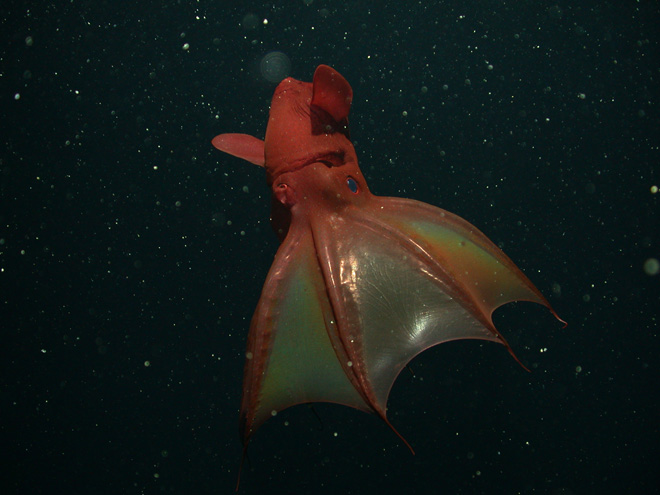
VAMPIRE SQUID

Neither a true octopus nor a squid, the vampire squid doesn't have ink sacs of little use in dark waters. When it's frightened, the vampire fires a gooey cloud of bioluminescent mucus, surprising attackers and giving it a chance to escape. Vampire squid also use photophores on their bodies' undersides to hide their outlines against the sky.


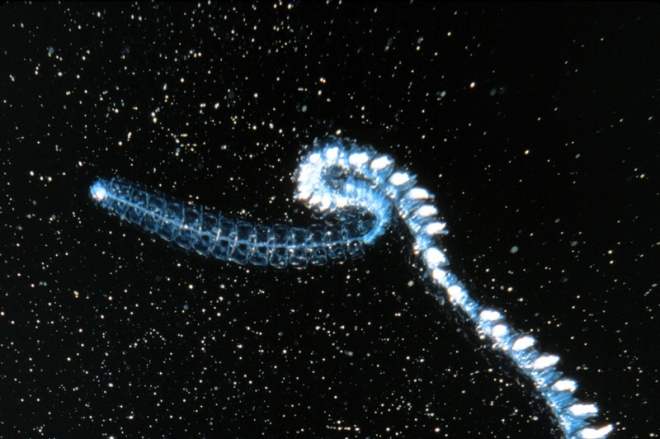
COLONIAL JELLY

This kind of jellyfish, which can grow to about 12 inches, controls its elevation in the water with a gas-filled float. Gas is released through a pore in the bottom of its float, which is refilled through secretions from a special gland.

Its luminescence is a mystery. Scientists think it startles predators, but it's just a best guess.

Source 
0 Comments

Newly-Discovered "Sparklemuffin" & "Skeletorus" peacock spiders 

3/10/2015

0 Comments

 
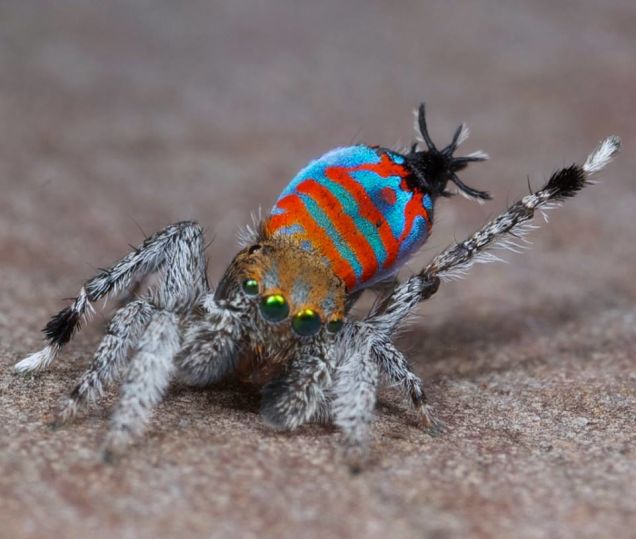
Photo Credits: Jürgen Otto.
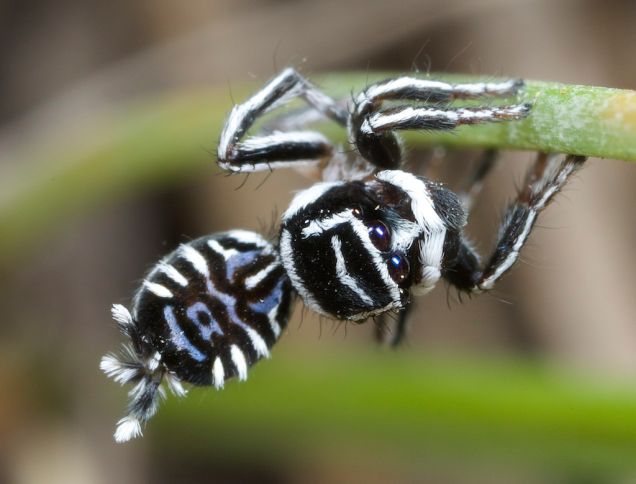
A newly-identified species of peacock spider dubbed "Sparklemuffin" and "Skeletorus". This spiders were discovered in southeast Queensland, Australia, by UC Berkeley grad student Madeline Girard, according to Live Science: 

Girard affectionately gave the nickname Sparklemuffin to one of the species, Maratus jactatus, which has bluish and reddish stripes on its abdomen. She nicknamed the other species Skeletorus for its white markings on a black background, which make it look a bit like a skeleton.

Skeletorus, officially named Maratus sceletus, "looks dramatically different [from] all other peacock spiders known to date, making me think that this group is perhaps much more diverse than we had thought," said Jürgen Otto, an entomologist who specializes in photographing the arachnids and who co-authored the report.

Peacock spiders are known for their distinctive mating dances. 

Source 
0 Comments

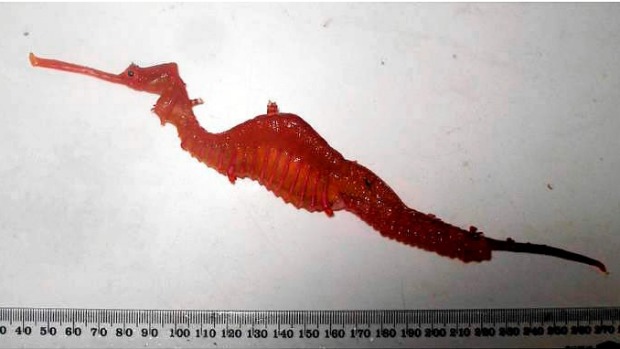
Ruby seadragon: new species discovered in Australia

3/9/2015

0 Comments

 
Imagen
The ruby seadragon. Photo: Western Australian Museum
A bright red, black-eyed beauty, it is only the third species of these peculiar Australian marine creatures ever discovered, the ruby seadragon is believed to live in dark waters beyond normal scuba diving depth, and so escaped attention, unlike its relatives, the leafy and weedy seadragons, the discovery of the first new seadragon species in 150 years was highly unexpected.

It was a male, brooding young and about 24 cm long and still a vivid red when it was photographed on the research ship.  The ruby seadragon was found at a depth of 51 metres, just a few kilometres off the Austalian coast.

The team gave it the scientific name Phyllopteryx dewysea, naming it after  Mary "Dewy" White, an American benefactor of seadragon conservation and research.

Source 

Un belleza roja de ojos negros brillantes, es sólo la tercera especie de estas peculiares criaturas marinas australianas jamás descubiertas, se cree que el dragón rubí de mar vive en aguas oscuras más allá de la profundidad normal de buceo, y es así que escapó de la atención de los investigadores, a diferencia de sus parientes los dragones de mar foliáceos, el descubrimiento de la primera nueva especie de dragon marino en 150 años fue muy inesperado.

Era un macho, juvenil y aproximadamente 24 cm de largo el cuál seguia teniendo un rojo vivo cuando fue fotografiado en el barco de investigación. El dragón rubí de mar fue encontrado a una profundidad de 51 metros, a pocos kilómetros de la costa austaliana.

El equipo le dio el nombre científico de Phyllopteryx dewysea dándole el nombre de Mary "Dewy" White, una benefactora americana en la conservación e investigación de los dragones marinos. 

Fuente
0 Comments

The Frameworks of Absence

3/5/2015

0 Comments

 
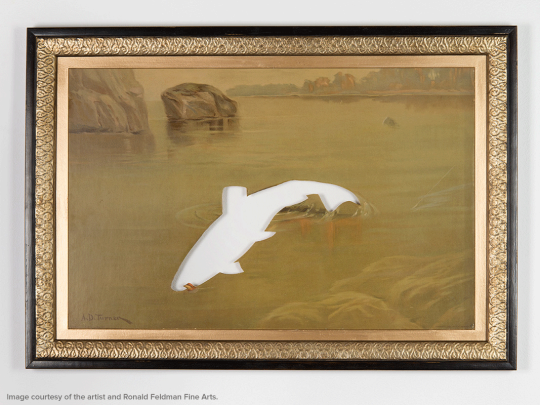
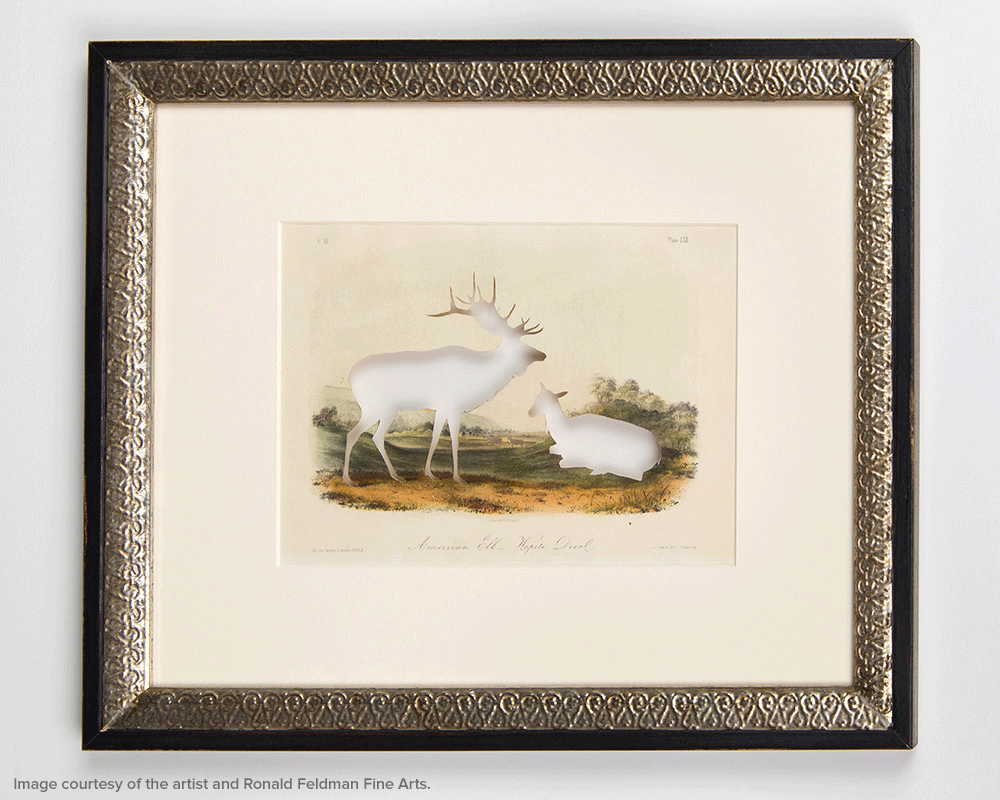
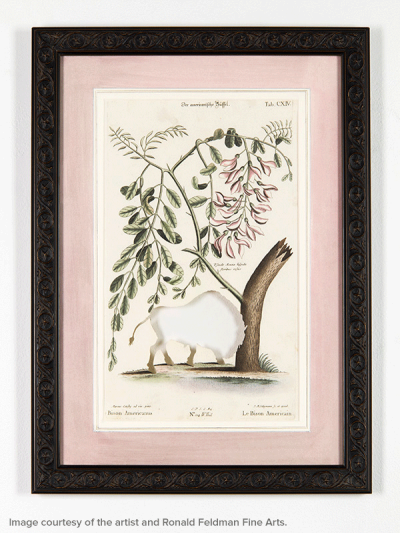
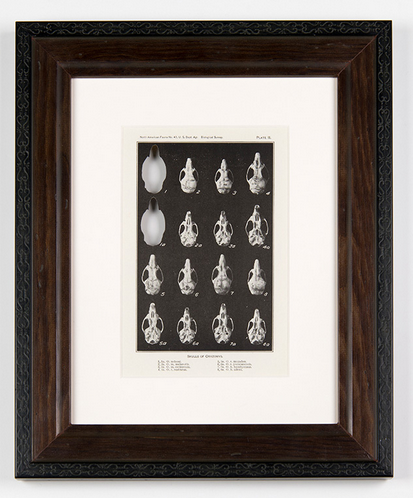
How do you visualize mass extinction? To create “The Frameworks of Absence,” his exhibition at NYC’s Armory Show, artist Brandon Ballengée cut extinct animals out of historic natural history prints. Ballengée says: 

"Responding to this cataclysm, I physically cut images of missing animals from historic prints and publications printed at the time in history when the depicted species became extinct. For example, in RIP Pied or Labrador Duck: After John James Audubon (1856/2007), the image of the birds was removed from an original 1856 Royal Octavo (hand-colored by one of Audubon’s sons) printed at the same point in history as the actual species disappeared. The resulting image minus the subject is what I refer to as a Framework of Absence". 

“The idea is when people are walking through the rest of the Armory show, they see this booth, and are transported into a museum, a museum of all of these animals that have disappeared in recent times.”

The project is now on view at The Armory Show in New York City through March 8.

Source

¿Cómo visualizas la extinción masiva? Para crear "Los Marcos de la Ausencia" exposición en la ciudad de Nueva York en Armory Show, el artista Brandon Ballengée cortó animales extintos de grabados de historia natural. Ballengée dice:

"En respuesta a este cataclismo, corté físicamente imágenes de animales de grabados y publicaciones históricas impresas en el momento histórico en el que las especies representadas se extinguieron, por ejemplo, en RIP Pied o Pato Labrador:. Después de John James Audubon (1856/2007) , la imagen de las aves fue retirado de un original 1856 de Royal Octavo (coloreada a mano por uno de los hijos de Audubon) impresa en el mismo punto en la historia como la especie reales desaparecieron. La imagen resultante menos el sujeto es lo que me refiero como un "Marco de Ausencia ".

"La idea es que la gente esté caminando por el Armory Show, y que al ver esta exposición, sean transportados al museo, un museo donde todos estos animales han desaparecido en los últimos tiempos."

El proyecto está ahora en exhibición en The Armory Show en Nueva York hasta el 8 de marzo.

Fuente
0 Comments

STUNNING COLLECTION OF BEETLES FROM AROUND THE WORLD

3/4/2015

0 Comments

 
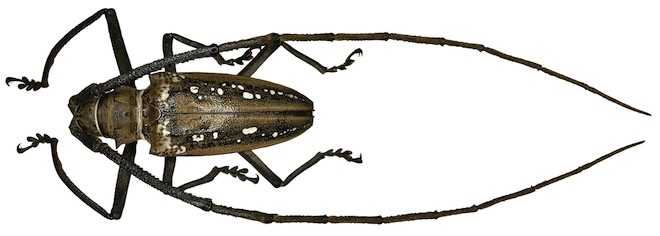
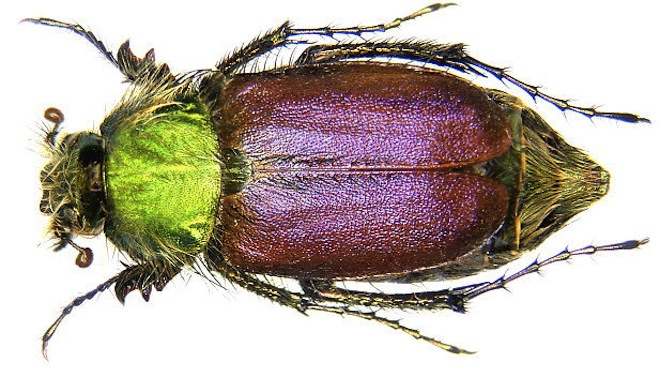
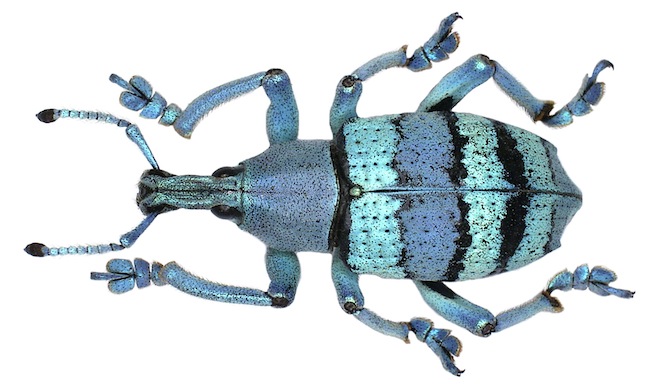
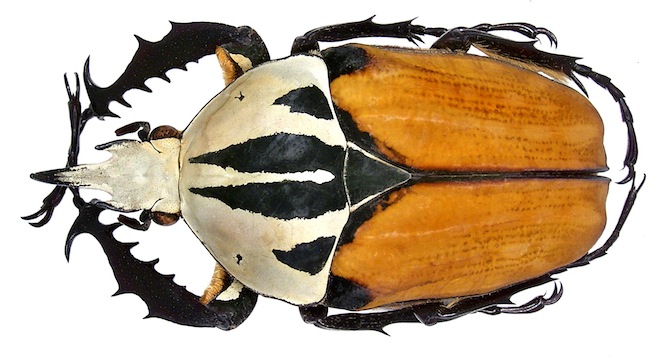
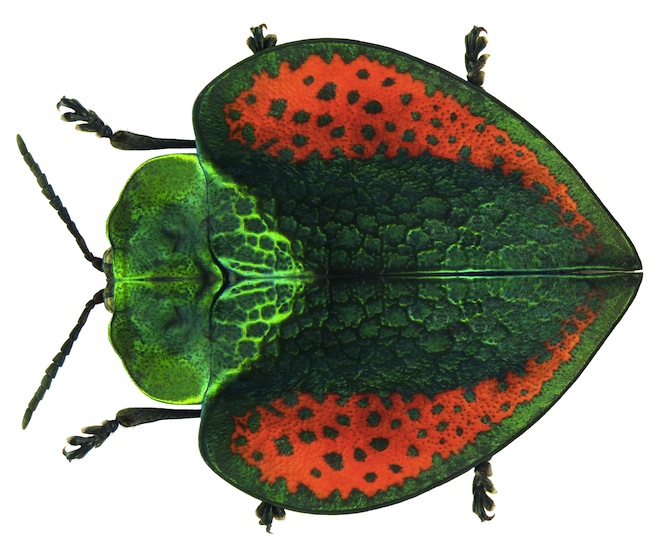
Batocera wallacei, “Wallace’s long-horn beetle,” New Guinea.
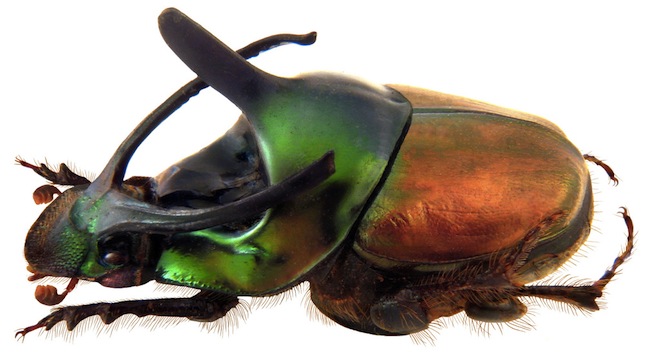
Onthophagus imperator, India.
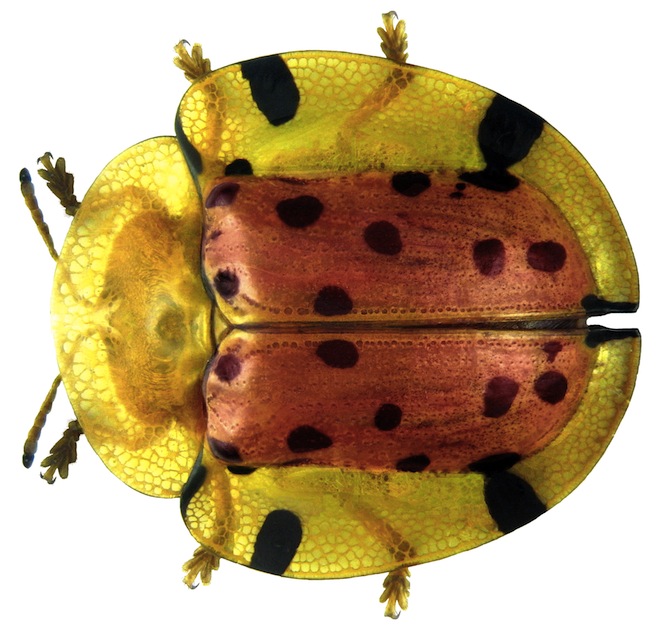
Aspidomorpha miliaris, “Spotted tortoise beetle,” India.
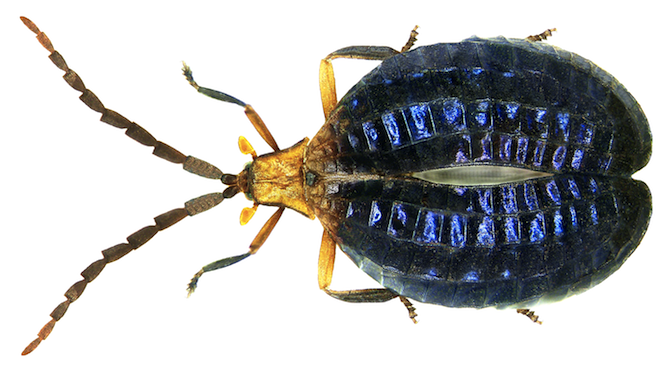
Broxylus pfeifferi, Indonesia.
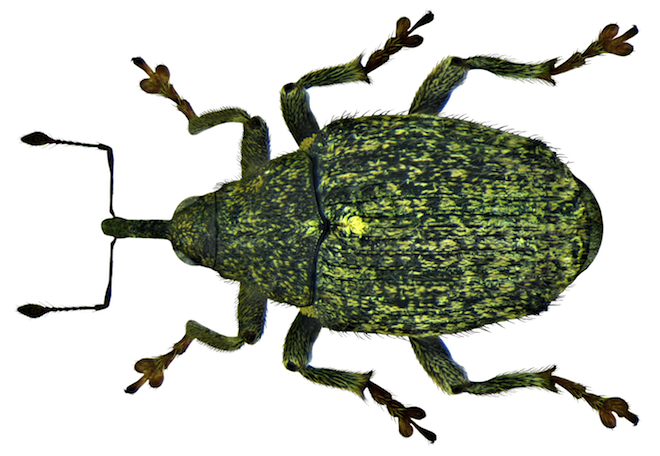
Ceutorhynchus pallidactylus, “cabbage stem weevil,” Germany.
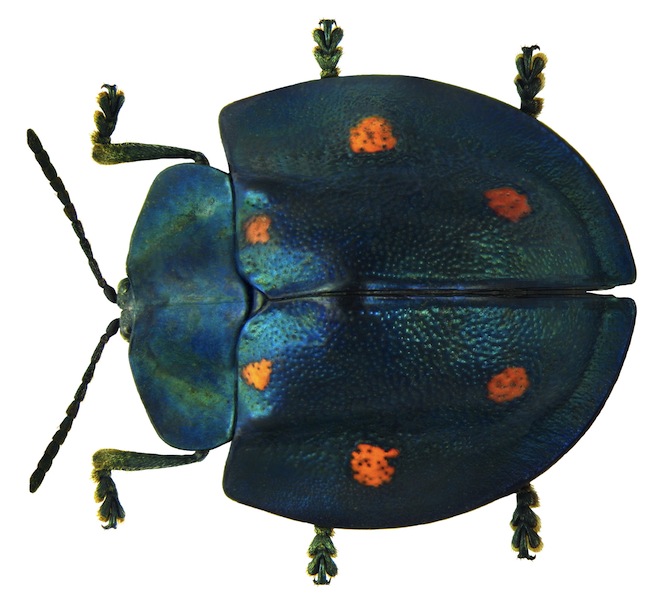
Cyrtonota sexpustulata, Brazil.
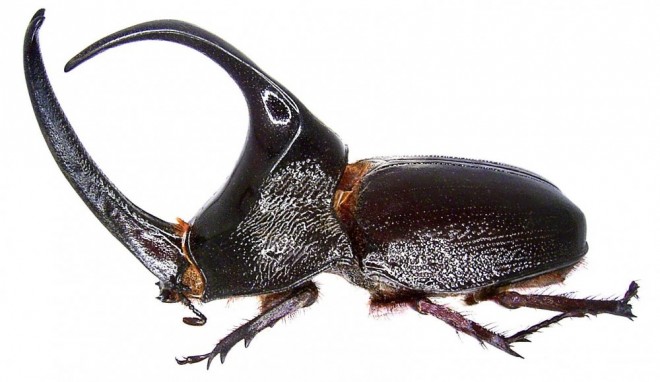
Enema pan, Peru.
Eulasia papaveris, Turkey.
Eupholus amalulu, Papua New Guinea.
Mecynorrhinella oberthuri, Tanzania.
Stolas chalybaea, Brazil.
Stolas mannerheimi, Peru.
Udo Schmidt  a retired researcher, has been collecting beetles since his late 20s. Now, at 70, his beetle drawers have swelled to 30,000 specimens representing more than 6,000 species.

Schmidt is also a talented photographer, and has digitally archived his stunning collection on his website and Flickr, this hobby has taken him to 22 countries around the world.  He is inspired by the “overwhelming variety of shapes and colors, beauty and elegance,” of beetles — the largest group of insects in the world. 


Source
Udo Schmidt un investigador jubilado , ha estado recolectando escarabajos en los últimos 20 años. Ahora, a los 70 años, sus cajones de escarabajos ha aumentado a 30.000 ejemplares que representan a más de 6.000 especies.

Schmidt también es un talentoso fotógrafo, y ha archivado digitalmente su impresionante colección en su página web y Flickr, esta afición le ha llevado a 22 países de todo el mundo. Se inspira en la "abrumadora variedad de formas y colores, la belleza y la elegancia", de escarabajos - el mayor grupo de insectos en el mundo.

Fuente 
0 Comments

golden possum

3/3/2015

0 Comments

 
Imagen
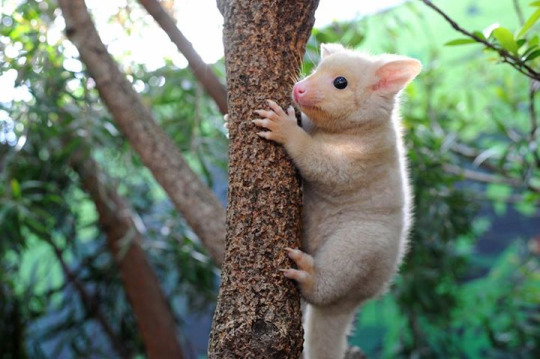
A 6-month-old golden possum, born at WILD LIFE in Sydney. These adorable and rare creatures are an unusual form of the common brushtail possum that get their fluffy golden coats from a genetic mutation that results in low levels of melanin in their skin and fur; this is the same pigment that gives human skin and hair its color and makes you look tanned.


Source 
0 Comments

Overpasses

3/2/2015

0 Comments

 
Imagen
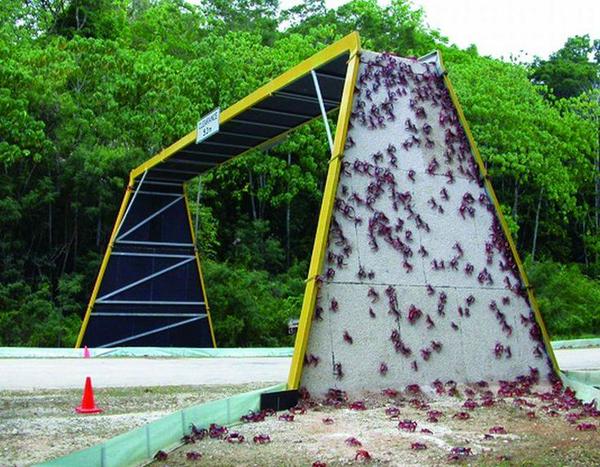
On Christmas Island, Australia, there are between 50 and 120 million red crabs that go on an annual journey to the ocean to breed. It is while they make these journeys that they suffer their greatest casualties, because the path of migration goes through high-traffic roads. But some clever people came up with these great bridges as solutions that will save millions of lives.


Source
0 Comments

Zao Fox Village

3/1/2015

0 Comments

 
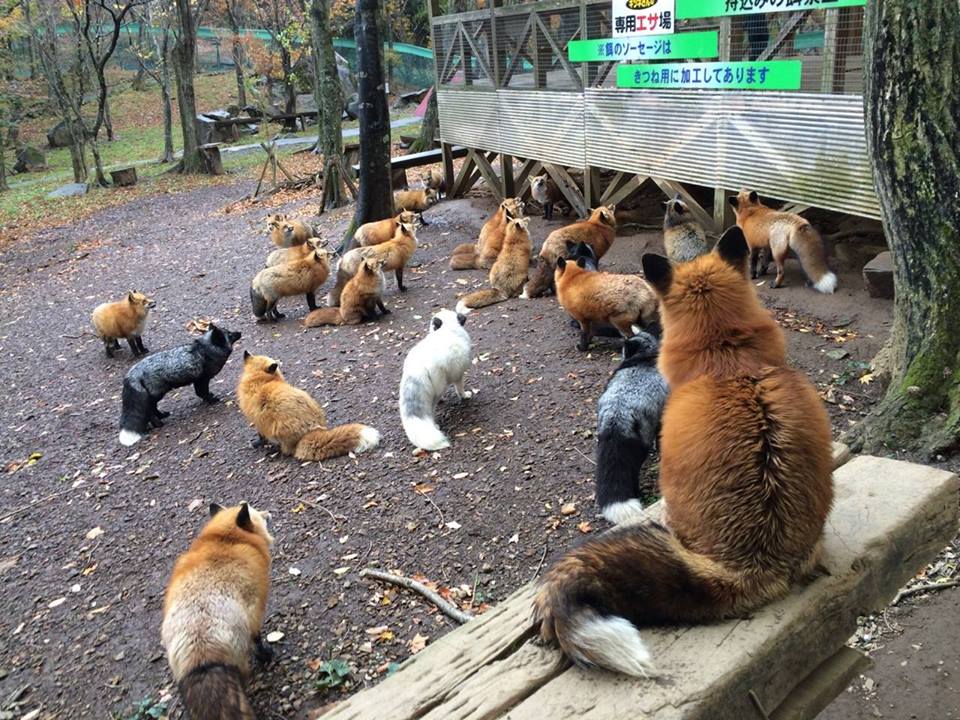
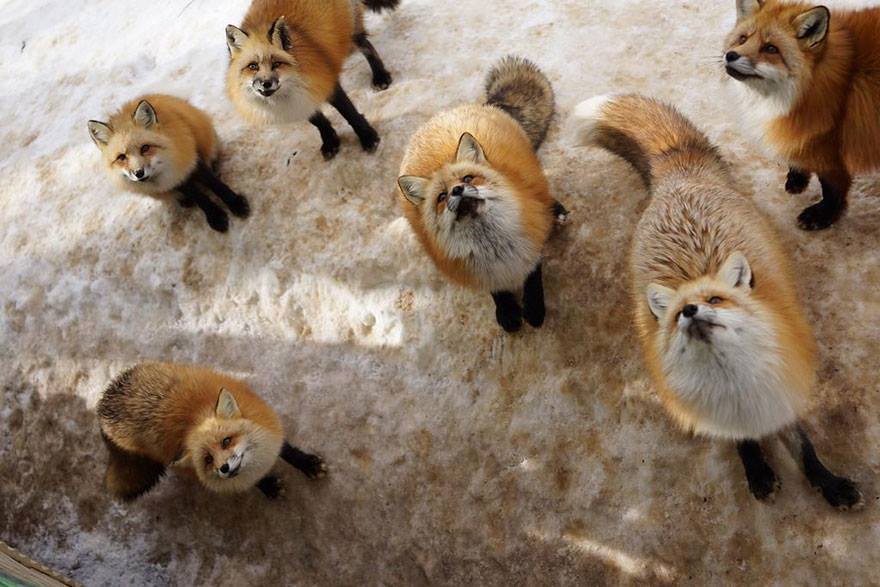
Located in the mountains near Shiroishi, there is a "village" that is filled with over 100 animals and 6 different species of foxes. This Fox Village is one of the best places in Japan to go and see foxes. The foxes freely roam a preserve which visitors can enter. Foxes are popular creatures in Japanese folktales and lore, and many of us may be interested in the history and culture behind these foxes. 

Source 
Ubicado en las montañas cerca de Shiroishi, hay una "villa" que se llena con más de 100 animales y 6 diferentes especies de zorros. Esta "Villa Zorro" es uno de los mejores lugares en Japón para ir a ver zorros. Los zorros deambulan libremente en un lugar preservado el que los visitantes pueden entrar. Los zorros son criaturas populares de los cuentos y leyendas japonesas, y muchos de nosotros podemos estar interesados en la historia y la cultura detrás de estos zorros. 

Fuente
0 Comments
Forward>>

    Blog Archive
    ​
    This blog isn't active anymore
    ​Disclaimer

    All the pictures on this blog and social networks belong to their respective authors and proper credits are given. Photos are used for illustrative and educational purposes only.

    Todas las fotografías de este blog y redes sociales son propiedad de sus respectivos autores, se mencionan los respectivos créditos. Estas fotos son únicamente utilizadas con fines ilustrativos y educativos.


    Archives

    March 2019
    January 2019
    December 2018
    November 2018
    October 2018
    August 2018
    May 2018
    April 2018
    March 2018
    February 2018
    August 2017
    July 2017
    June 2017
    May 2017
    January 2017
    December 2016
    October 2016
    August 2016
    July 2016
    June 2016
    May 2016
    April 2016
    March 2016
    February 2016
    January 2016
    December 2015
    November 2015
    October 2015
    September 2015
    August 2015
    July 2015
    June 2015
    May 2015
    April 2015
    March 2015
    February 2015
    January 2015
    December 2014
    November 2014
    October 2014
    September 2014
    August 2014
    July 2014
    June 2014
    May 2014
    April 2014
    March 2014
    February 2014
    January 2014
    December 2013
    November 2013
    October 2013
    September 2013
    August 2013
    July 2013
    June 2013
    July 2012

    RSS Feed

Powered by Create your own unique website with customizable templates.
  • Home
  • About
  • Blog
  • Videos
  • Podcast
  • Support
  • Press
  • Contact